UK education businesses win top trade prize

Three higher education institutions have been honoured with the most prestigious award for UK businesses – the King’s Awards for Enterprise. 

The winners, including Times Higher Education, UK upmarket teen educator Oxford Royale Academy and the University of Hertfordshire, were announced on May 6. 

Paul Howarth THE CEO said receiving the “prestigious award” was an “an absolute career highlight for me and an amazing seal of approval for the tremendous work THE does for one of the world’s most important sectors – higher education”. 

THE was recognised in the international trade category for demonstrating rapid growth as a global provider of higher education data, insights and services. 

It is one of only 252 organisations in the UK to be recognised by the royal initiative, now in its 59th year, which was established by HM Queen Elizabeth to recognise outstanding UK businesses. 

THE’s portfolio includes university rankings, data products, global events and consultancy, with clients in 85 countries.  

Meanwhile, Oxford Royale refers to itself as a leader in premium summer school education. The award, also in the international trade category, recognises a business that welcomes students from over 175 nations. 

George Humphreys, Oxford Royale’s CEO, expressed profound gratitude for the recognition. “We are delighted to receive this prestigious award, which serves as a testament to our commitment to providing transformative educational experiences for students worldwide, right here in the UK,” he said. 

The University of Hertfordshire also nabbed an award in the international trade category. 

The university is one of the largest international student recruiters for post-1992 universities and was the only university to be recognised with a King’s Award for Enterprise this year. 

Despite global challenges including the pandemic, Herts has expanded its international sales by 330% in the past six years.

The university has 135 study abroad partners and 19 transnational education partners.

“This award is extremely encouraging and shows there is an appreciation beyond the sector of the immense value and need for our international community”, said Professor Quintin McKellar, University of Hertfordshire Vice Chancellor.

“The fact that our education is held in such high esteem around the world, making it a great export product, and that we are one of the most popular places to study is something to celebrate.”

The post UK education businesses win top trade prize appeared first on The PIE News.

OfS report paints “bleak” financial picture for English HE

Higher education providers should “re-test their assumptions” about domestic and international student growth amid an uncertain future – that was the message from the Office for Students, following on from its financial sustainability annual review.

The regulator is calling on providers in England to “look carefully” at the credibility of their forecasts and make changes to funding models after the review found a decline in financial performance in 2022-23.

It painted a picture of declining surplus levels, cash flow and net liquidity, with more providers expected to fall into deficits in coming years.

No growth across the sector could leave nearly two-thirds of institutions in deficit by 2026-27, with 40% facing low liquidity at year end, it warned.

“Many universities continue to manage their finances well. Many have built a strong asset base to allow them to weather financial storms. But the picture across the sector is becoming increasingly challenging,” said Susan Lapworth, chief executive of the OfS.

“Financial performance and strength vary significantly for different institutions and our analysis shows that an increasing number will need to make significant changes to their funding model in the near future to avoid facing a material risk of closure.”

The OfS added that while net liquidity has fallen, there is “evidence of the sector adjusting to protect its cash flow in the face of financial challenges”.

It highlighted that although an improved outlook is predicted by 2026-2027, much of the projected additional income comes from anticipated growth in both domestic and international students.

The OfS warned of “uncertainty” about the ability to recruit significant numbers of extra students resulting in “significant risk that the actual financial challenges facing the sector in the short, medium and long term are greater than providers are forecasting”.

The report is therefore “a signal to all institutions to re-test their assumptions about increases in UK and international students”.

“The numbers reported to us for the sector as a whole are just not credible,” said Lapworth.

“Some institutions will certainly be able to grow. But in a competitive market – and with some evidence that applicant numbers are falling – others will struggle to expand.”

“The value of domestic tuition fees is now 25% lower than it was in 2015 when adjusted for inflation.”

In response to its analysis, the OfS is calling on all universities and other higher education providers to identify the steps they will take if future growth is not achieved.

The worst case scenario outlined in the report is a significant reduction in international student numbers and no cost cutting activity.

Such a scenario would see over 80% of institutions in deficit and nearly three-quarters facing low levels of liquidity, warned Lapworth.

“That is why universities should redouble their efforts to avoid optimism bias and identify now the actions they will take to ensure they remain on a sound financial footing.”

The report highlights five key risks affecting the sector:

Continuing decline in the real-terms value of income from UK undergraduates combined with inflationary and economic pressures on operating costs
A recent apparent reduction in applications from UK and international students after years of strong growth, especially from international students
A higher education financial model that has become reliant on fee income from international students, with a particular vulnerability where recruitment is predominantly from a single country
The affordability of necessary estates maintenance and development and the significant cost of investment needed to reduce carbon emissions as part of providers’ commitments to achieve net zero
Cost of living difficulties for students and staff, which challenge both student recruitment and the support needed by students during their time in higher education.

Jo Johnson, FutureLearn chair, described the report as “very worrying indeed”.

The former universities minister puts the state of the sector partly down to continued tuition fee freezes, and is therefore calling for on government to allow domestic fees to rise with inflation.

“The value of domestic tuition fees is now 25% lower than it was in 2015 when adjusted for inflation,” said Jo Johnson, speaking on Radio 4.

“It’s a very bleak outlook and of course it comes at a time when the government is considering steps that might significantly worsen this outlook if they take steps to reduce the ability of international students to stay on for a short period of time after they study to work in the UK economy.”

In the same week as the regulator’s report, the Migration Advisory Committee published the findings of its review into the UK Graduate Route. The Committee was unequivocally in favour of the route in its findings, and Johnson said that it’s “critical” the government takes note.

“If we see the kinds of reduction in the international student numbers that we are presently seeing we will tip our institutions over the edge. The government needs to take stock of the damage this is going to do to core government objectives.”

Johnson highlighted the wider benefit of international students, using the case of Teesside University, where each intake of international students bring £240 million of value to the local economy.

Towns such as Darlington, Stockport and Middlesborough significantly benefit in this way, he pointed out, and would be “hammered” if international students stop coming to the UK.

The post OfS report paints “bleak” financial picture for English HE appeared first on The PIE News.
Pembelajaran Sains Inovatif dengan LabXchange

Latar Belakang

Untuk dapat bersaing di Era Revolusi Industri 4.0 ini, kita perlu membekali anak-anak kita dengan berbagai literasi baru, termasuk literasi dalam bidang sains. Literasi sains merupakan kemampuan untuk memahami konsep dan proses sains serta memanfaatkan sains untuk menyelesaikan permasalahan dalam kehidupan sehari-hari. Lantas bagaimana potret literasi sains pelajar Indonesia saat ini?

Berdasarkan Programme for International Student Assessment (PISA) pada tahun 2018, skor literasi sains siswa Indonesia hanya sebesar 396. Skor tersebut masih jauh dari rata-rata skor global (489) dan menempatkan Indonesia pada peringkat 70 dari 78 negara yang dinilai.

Memang banyak faktor dalam sistem pendidikan Indonesia yang menyebabkan rendahnya literasi sains pelajar kita. Namun pada kesempatan ini, kita tidak sedang saling menyalahkan. Kita akan mencoba bersama-sama mengupayakan solusi. Salah satunya adalah dengan meningkatkan akses guru dan pelajar Indonesia terhadap sumber pembelajaran sains yang berkualitas.

LabXchange: Welcome to The World’s Science Classroom

Saat ini kita hidup di kampung global (global village), di mana kita bisa dengan mudah untuk saling belajar dan berkolaborasi dengan mitra-mitra terbaik di seluruh dunia. Termasuk dalam pembelajaran sains di sekolah-sekolah. Terkait dengan hal tersebut, Global Educollab memperkenalkan LabXchange, sebuah platform pembelajaran digital dari Harvard yang memungkinkan semua guru dan pelajar untuk dapat  mengakses pembelajaran sains yang berkualitas secara gratis.

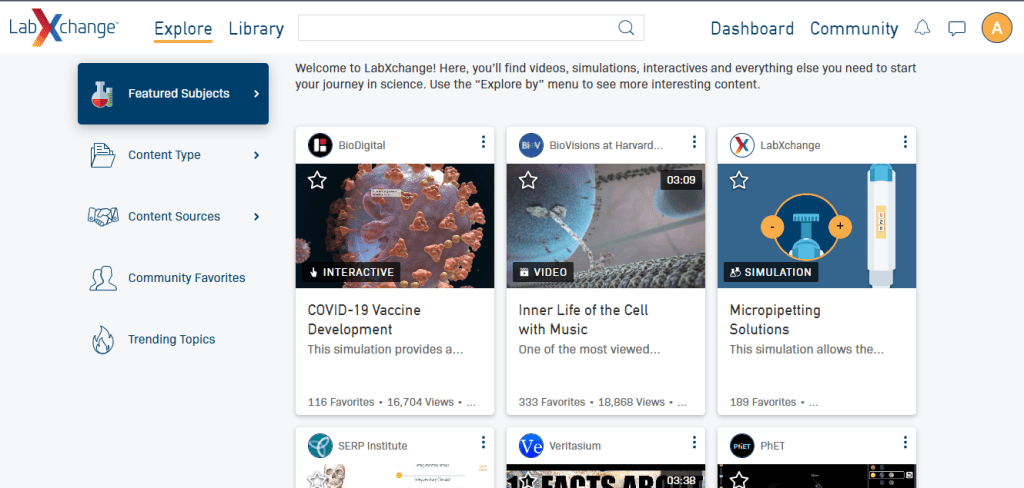
LabXchange menyediakan konten pembelajaran sains  berkualitas tinggi, termasuk simulasi lab, yang dapat dipadu-padankan dan disesuaikan menjadi narasi pembelajaran kelas yang menyenangkan. LabXchange juga dilengkapi dengan fitur sosial berupa kelas, forum diskusi, dan bimbingan (mentorship), yang memberdayakan dan menghubungkan pelajar, pendidik, serta peneliti di seluruh dunia.

Tampilan LabXchange

Webinar LabXchange

Dalam waktu dekat, Global Educollab bekerja sama dengan LabXchange akan menyelenggarakan webinar dengan topik pembelajaran sains inovatif dengan menggunakan LabXchange. Nantikan tanggalnya!

Semoga pelajar-pelajar Indonesia semakin melek dan akrab dengan Sains. Semoga banyak dari mereka yang kelak menjadi ilmuwan-ilmuwan hebat yang karyanya bermanfaat bagi Indonesia dan dunia!

Mengeksplorasi Dunia Mikro

Maha Besar Tuhan yang telah menciptakan semesta yang sangat luas, teratur dan mengagumkan. Juga menciptakan dunia mikro yang tak kalah mengagumkan. Seperti baru-baru ini, manusia seluruh dunia dibuat repot oleh satu mahluk sangat kecil bernama virus Corona-19.

Ya, kita sesungguhnya dikelilingi oleh dunia mikro. Karena hewan dan tumbuhan terdiri dari sel-sel yang sangat kecil. Termasuk kita juga! Karena ukuran dunia mikro yang kecil, kita tidak bisa melihatnya dengan mata telanjang. Kita membutuhkan alat yang bernama mikroskop.

Syukurlah, saat ini ada mikroskop kertas yang harganya sangat terjangkau, yakni Foldscope. Mikroskop ini ditemukan oleh Manu Prakash and Jim Cybulski dari Stanford University.  Idenya adalah bagaimana membuat  mikroskop yang murah dan awet namun menghasilkan kualitas optik yang sama dengan mikroskop konvensional.

Foldscope – Mikroskop kertas

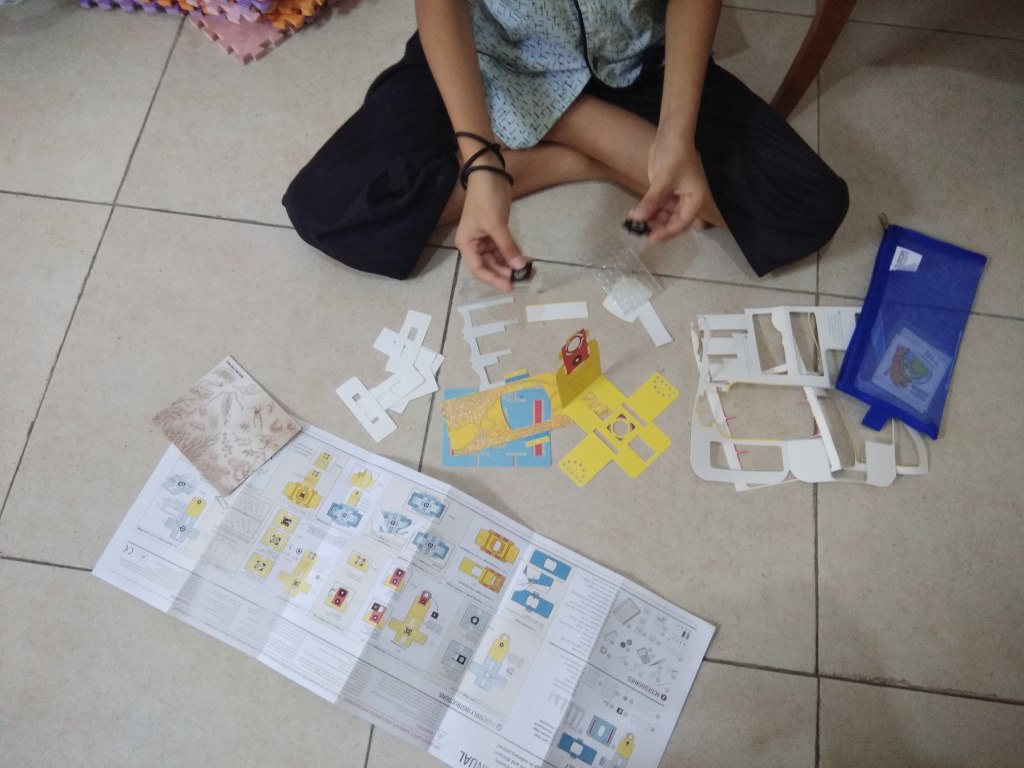
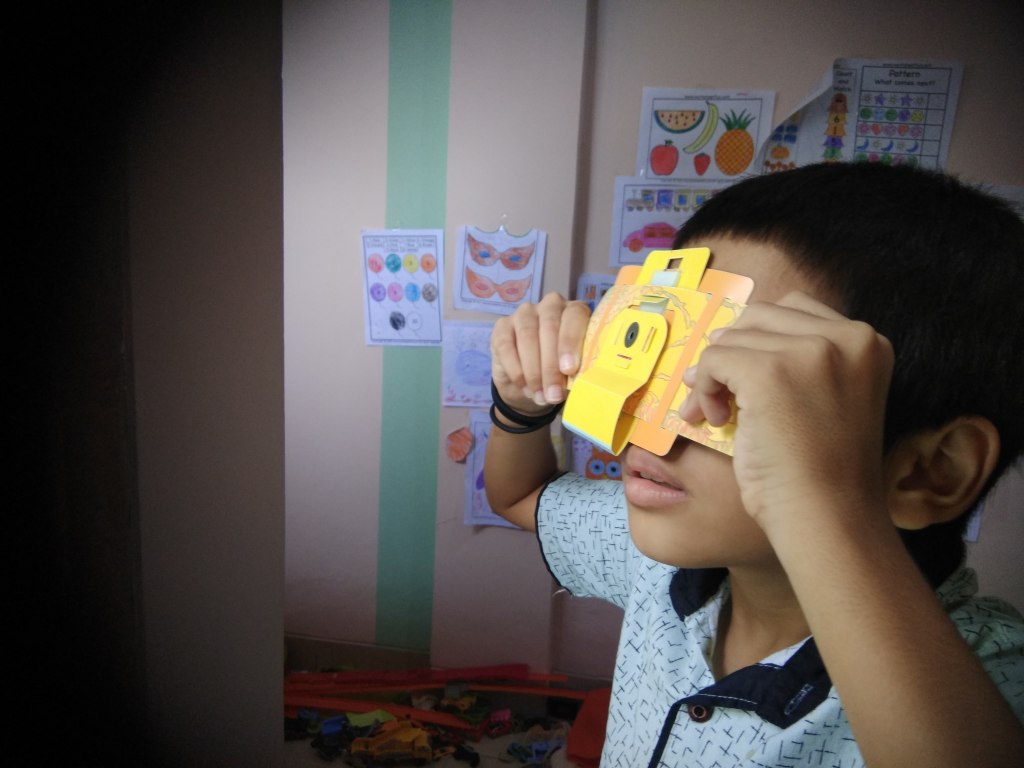
Merangkai Foldscope seperti membuat origami. Waktu yang dibutuhkan untuk merangkai satu unit Foldscope oleh anak-anak sekitar 30-60 menit. Agar lebih mudah, disarankan untuk melihat video tutorial Foldscope terlebih dahulu dan tetap didampingi oleh orang tua/guru.

Merangkai Foldscope

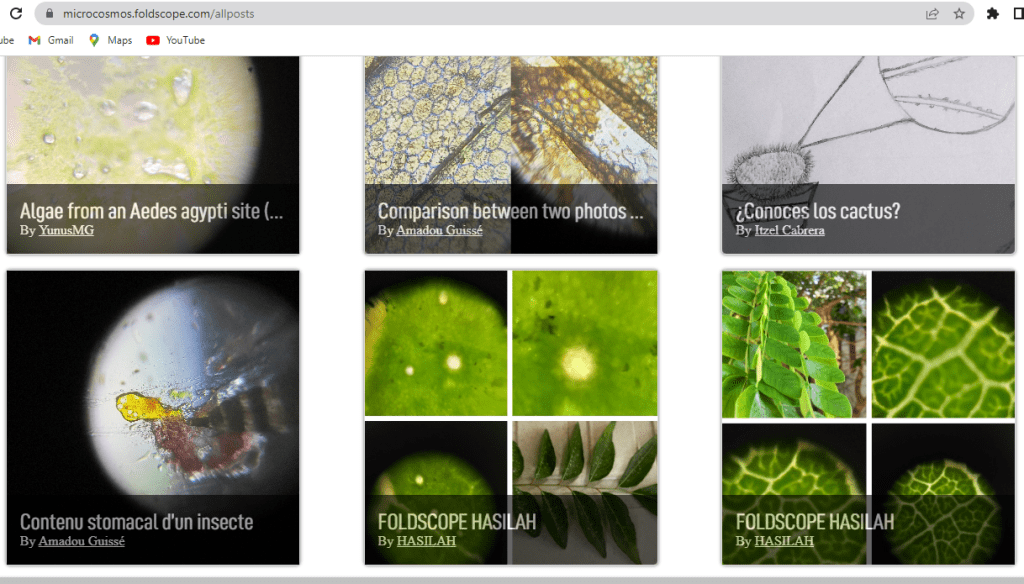
O ya, meskipun belum memiliki mikroskop ini, Sahabat-Sahabat tetap bisa mengakses hasil pengamatan dunia mikro oleh pengguna Foldscope dari seluruh dunia. Foldscope telah menyediakan platform komunitas online gratis berupa microcosmos. Ayo kita eksplorasi dunia mikro bersama-sama!

Komunitas Online Microcosmos

Menjelajah Luar Angkasa

Kali ini Global Educollab mengajak Sahabat-Sahabat semua untuk mengamati langit, menjelajahi luar angkasa. Tak perlu khawatir kalau tidak memiliki teleskop. Kita bisa menjelajahi luar angkasa melalui citra satelit dari komputer atau smartphone kita.

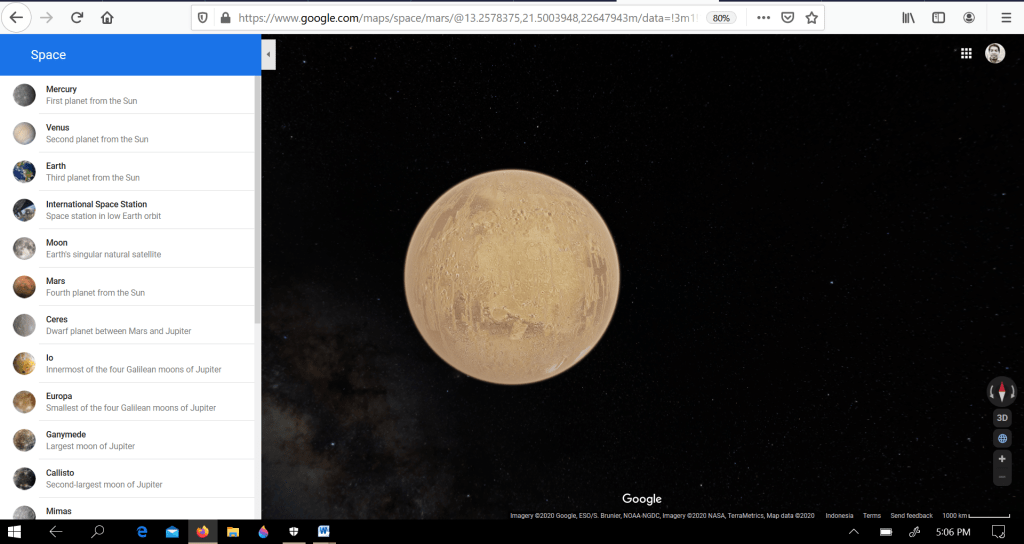
Menjelajah Luar Angkasa dengan Google Maps

  1. Buka Google Maps;
  2. Pilih Tampilan Satelit;
  3. Zoom Out dengan mouse atau pencet tombol minus (-) sampai muncul tampilan Bumi dan daftar planet serta benda angkasa lainnya;
  4. Selanjutnya kita bisa meng-klik dan melihat planet yang ingin kita jelajahi.

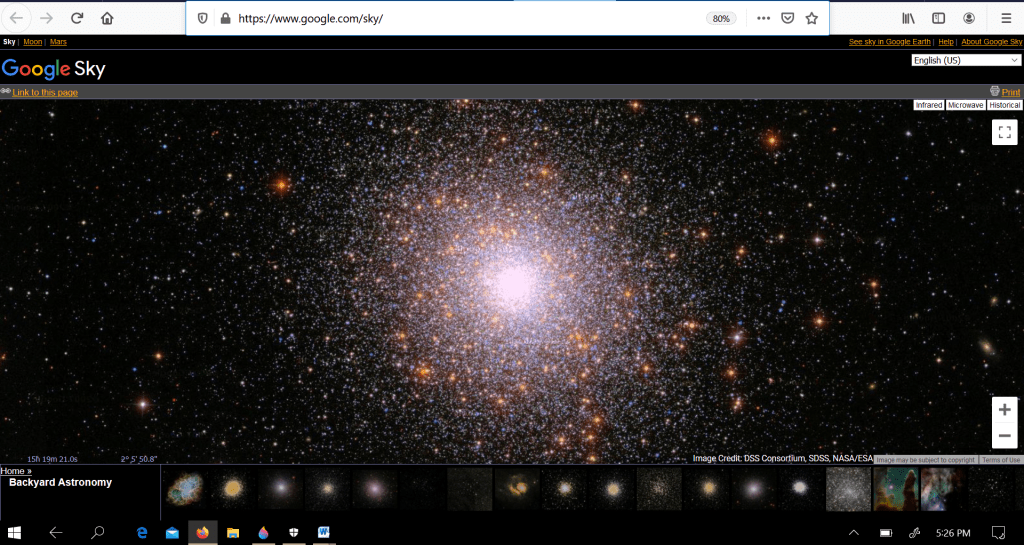
Untuk lebih memahami luar angkasa, kita bisa menjelajahi lebih detil di Google Sky Maps.

O iya, selain Google, kita juga bisa menjelajah luar angkasa melalui sumber-sumber berikut:

https://viewspace.org/

https://www.nasa.gov/

Selamat menjelajah luar angkasa! Sampai jumpa di Planet Mars!

Keliling Museum Dunia

Sahabat-Sahabat Global Educollab, ayo kita keliling museum dunia!

Emang bisa?

Di zaman digital ini, kita mudah banget mengunjungi museum dunia. Bahkan cukup dari rumah sendiri saja! Global Educollab merekomendasikan untuk mengunjungi museum virtual dari British Museum- London. Di sini kita bisa menjelajahi sejarah dunia dari artefak yang dipamerkan. Museum virtual ini dilengkapi dengan audio sehingga bisa sekaligus menjadi tempat belajar mendengar (hearing) bahasa Inggris.

The Museum of The World – British Museum

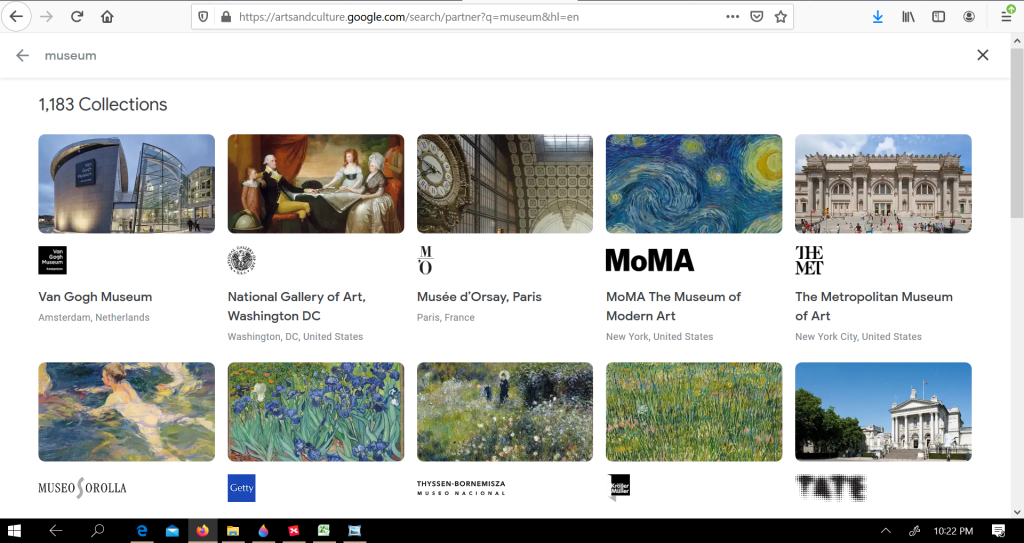
Untuk museum seni dan budaya, kita bisa mengunjungi Google Arts & Culture. Di sini, kita dapat menikmati koleksi ratusan museum seni dunia. Di antaranya Van Gogh Museum – AmsterdamNational Gallery of Art – Washington DCMusée d’Orsay – ParisMuseo Sorolla – MadridTokyo National MuseumSakıp Sabancı Museum – Istanbul. Kita juga bisa menikmati koleksi beberapa museum Indonesia, di antaranya Museum Nasional dan Unit Pengelola Museum Seni.

Google Arts & Culture

Selamat berkeliling ke museum-museum dunia ya!